01 Scalable software, platforms and recurring enterprise revenue models.
Technology companies operate in high-velocity commercial environments where competitive moats are established through proprietary IP, high customer switching costs, and rapid platform adoption. Financing technology requires looking beyond physical asset collateral to recurring revenue predictability, cohort retention, and scalable unit margins.
Core Metrics: Annual Recurring Revenue (ARR) • Net Revenue Retention (NRR >110%) • LTV / CAC Ratio (>3.5x)
02 Foundational compute, specialized inference, enterprise workflows and AI infrastructure.
Artificial intelligence represents a fundamental transformation in enterprise software and compute infrastructure. Commercial AI enterprises face unique capital requirements driven by heavy GPU compute expenditure, specialized research talent, and rapid technology obsolescence.
Core Metrics: Inference Cost per Query • Compute Utilization Rate • Enterprise Contract Value (ACV)
03 Commercial, residential, industrial and mixed-use development financing.
Real estate development is a cyclical, capital-intensive sector where financial viability depends on land acquisition basis, town planning approvals, construction cost control, pre-sales/pre-leasing thresholds, and debt capital stack optimization.
Core Metrics: Loan-to-Cost (LTC) • Loan-to-Gross-Realization-Value (LTGRV) • Qualifying Pre-Sales / Pre-Lease Coverage (>100% debt coverage)
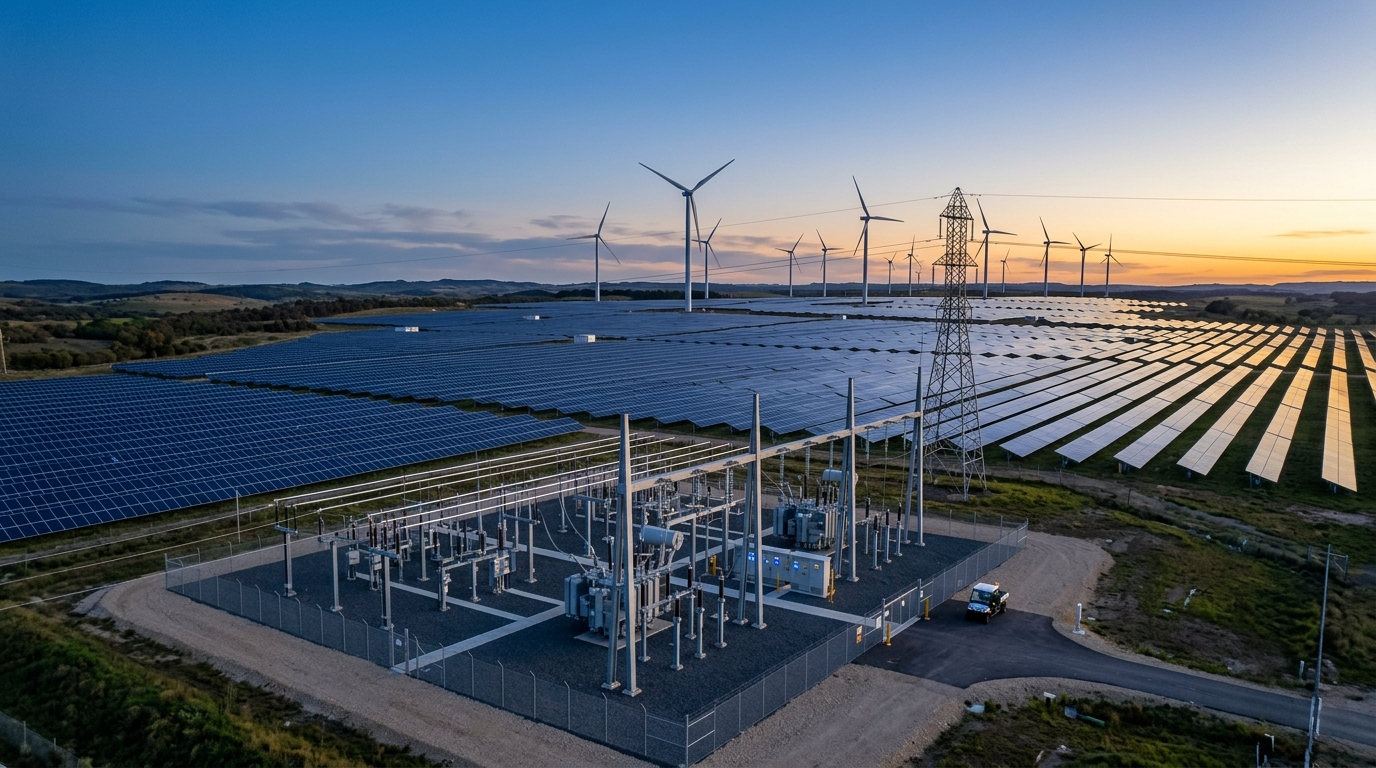
04 Utility-scale solar, wind, battery storage and green infrastructure.
The energy transition demands trillions in capital mobilization. Utility-scale solar, onshore/offshore wind, battery energy storage systems (BESS), and green hydrogen require sophisticated project finance structures founded on long-term offtake agreements and non-recourse debt.
Core Metrics: Levelized Cost of Electricity (LCOE) • Debt Service Coverage Ratio (DSCR: 1.25x–1.40x P50) • PPA Contract Coverage (% of generation contracted)
05 Traditional energy, gas infrastructure, transmission networks and utility distribution.
The energy and utilities sector provides critical base-load power and transmission infrastructure. Projects in this sector are characterized by long asset lifecycles, heavy regulatory oversight, and substantial capital expenditure requirements for maintenance and modernization.
Core Metrics: Regulated Asset Base (RAB) • Debt / EBITDA Multiple • Interest Coverage Ratio (FFO / Interest)
06 Hospital systems, specialized clinics, aged care and medical service networks.
Healthcare businesses operate at the intersection of non-discretionary patient demand and stringent regulatory oversight. Commercial viability requires balancing clinical quality, medical staffing costs, and public/private reimbursement frameworks.
Core Metrics: EBITDA per Operating Bed / Clinic • Occupancy Rate (%) • Staff-to-Patient Ratio & Nurse Wage Inflation
07 Pharmaceutical research, biotechnology, medical devices and clinical development.
Life sciences companies face binary clinical development risks, rigorous regulatory pathways (FDA, TGA, EMA), and multi-year research horizons before commercialization. Capital structuring must preserve liquidity through clinical trials without diluting scientific founders excessively.
Core Metrics: Cash Runway (Months to next clinical readout) • R&D Spend to Total Opex Ratio • Patent Exclusivity Horizon (Years remaining)
08 Transport, toll roads, port terminals, digital infrastructure and social concessions.
Infrastructure assets underpin economic activity and provide long-duration, inflation-linked cash flows. They are typically structured under long-term Public-Private Partnerships (PPP) or commercial concessions, requiring long-dated project finance debt.
Core Metrics: Concession Tenor Remaining (Years) • Availability Payment vs Traffic Volume Exposure • Loan Life Coverage Ratio (LLCR: >1.35x)
09 Advanced manufacturing, precision components, process industries and equipment.
Manufacturing businesses manage complex supply chains, specialized tooling machinery, and fluctuating raw material costs. Growth requires financing physical plant capacity, automating production, and funding extended working capital cycles.
Core Metrics: Overall Equipment Effectiveness (OEE) • Cash Conversion Cycle (Days: DSO + DIO - DPO) • Gross Margin per Machine Hour
10 Critical minerals, mining development, processing assets and commodity logistics.
Natural resources and mining projects operate in cyclical global markets where capital discipline, resource geology validation, environmental permitting, and offtake security are critical to navigating commodity price swings.
Core Metrics: All-in Sustaining Cost (AISC per unit produced) • Reserve Life Index (Years of proven reserves at current run-rate) • Resource Grade & Processing Recovery Rate (%)
11 Non-bank lending platforms, wealth managers, payments and insurance intermediaries.
Financial services and fintech businesses manage capital velocity, regulatory capital compliance, credit risk models, and technology infrastructure. Financing in this sector focuses heavily on wholesale warehouse funding and balance sheet leverage.
Core Metrics: Net Interest Margin (NIM) • Loan Book Default Rate & 90+ Day Delinquency (%) • Assets Under Management (AUM) / Loan Book Size
12 Freight forwarding, fleet operations, third-party logistics (3PL) and automated distribution.
The logistics and supply chain sector connects global trade flows. Operating margins depend on route density, fleet utilization, automated sorting infrastructure, and fuel cost pass-through mechanisms.
Core Metrics: Fleet Utilization Rate (%) • Operating Ratio (Operating Expenses / Revenue) • Days Sales Outstanding (DSO)
13 Hotel developments, resort assets, premium hospitality networks and entertainment venues.
Hospitality assets combine physical real estate ownership with intensive operating business dynamics. Commercial success depends on location barriers, brand affiliation, occupancy rates, average daily rates (ADR), and food and beverage margin discipline.
Core Metrics: Revenue Per Available Room (RevPAR) • Average Daily Rate (ADR) • Occupancy Rate (%)